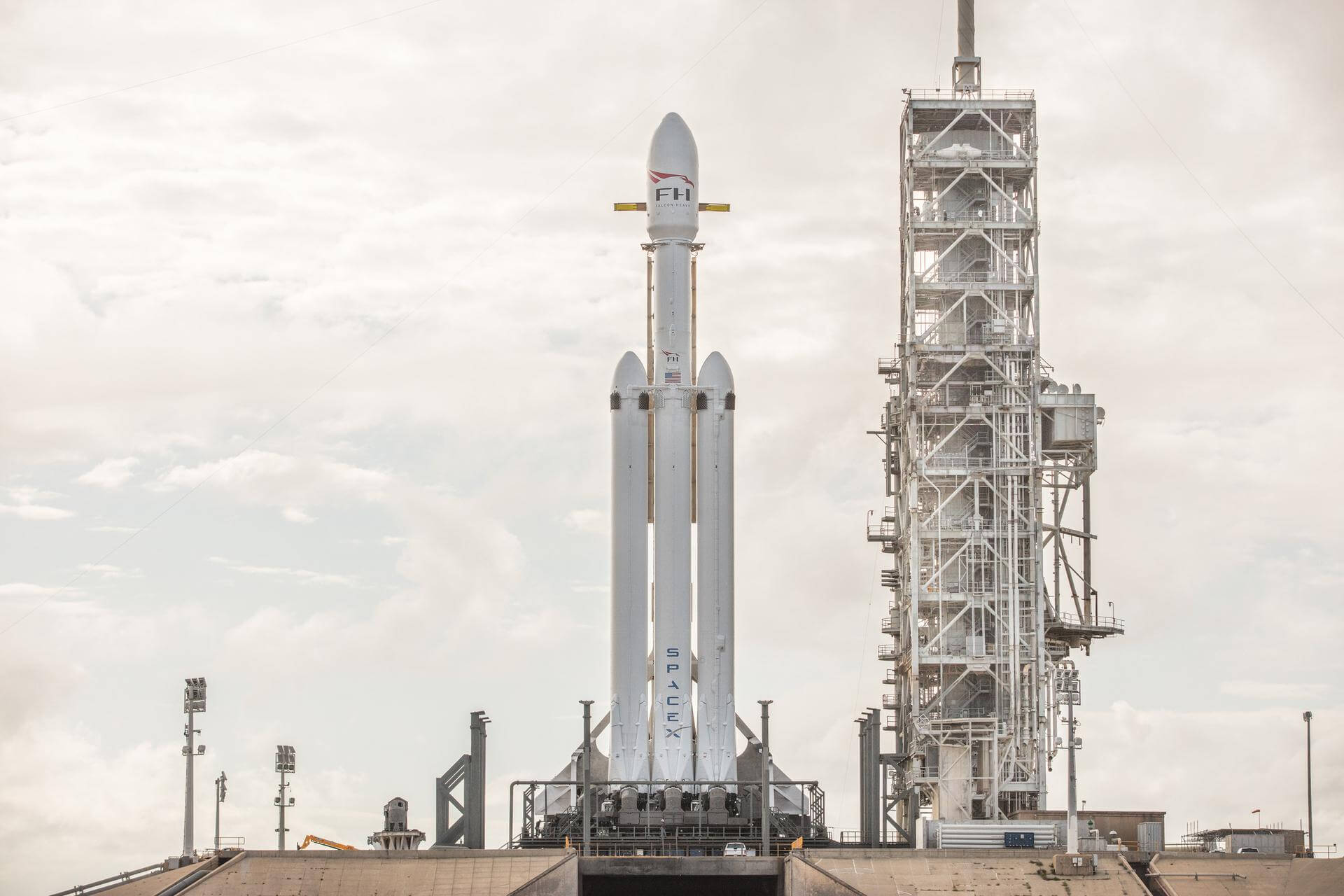
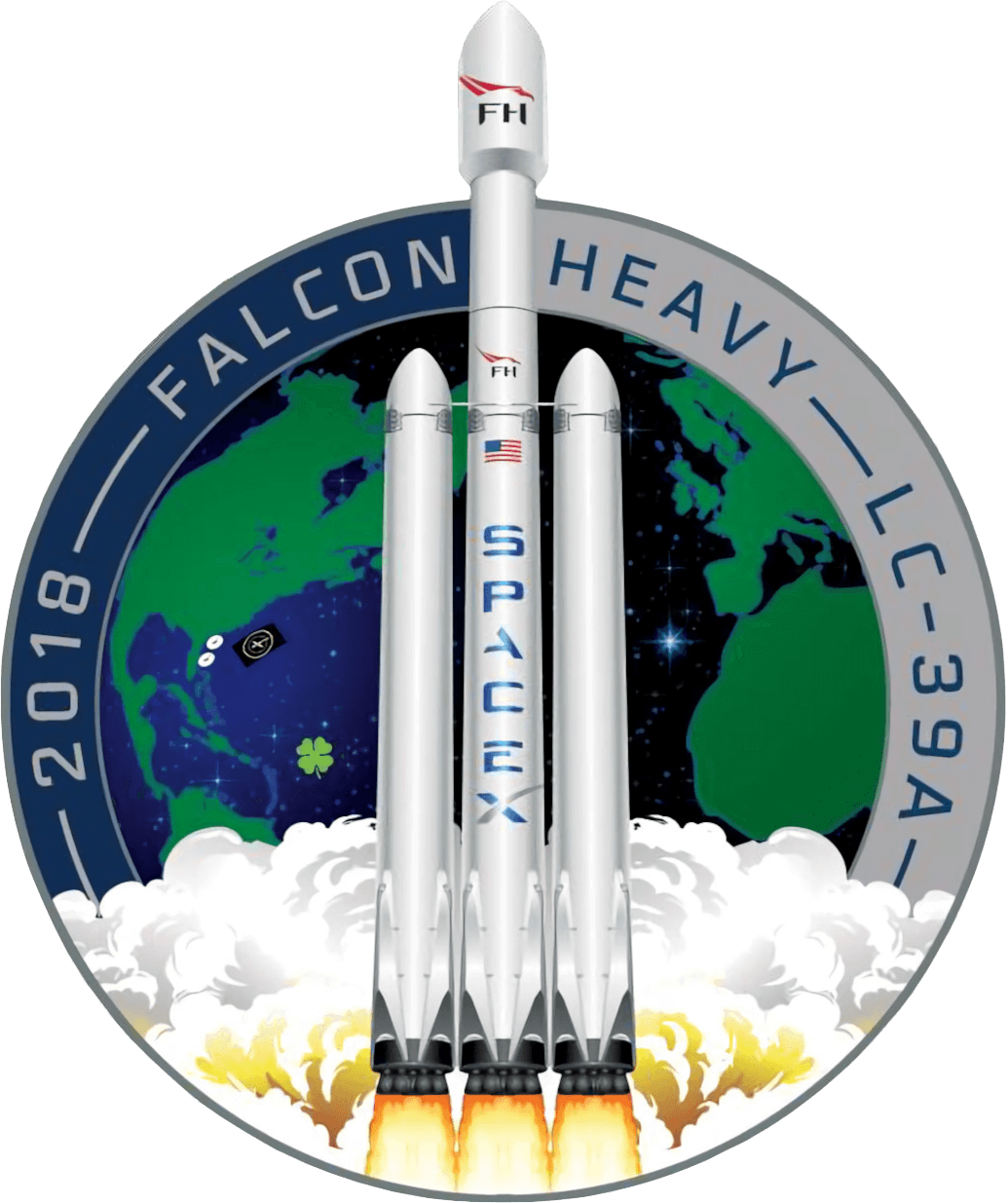
Demo Flight 1 (Maiden Flight)
Désignation complète : Falcon Heavy | Demo (Test Flight)
This will be the inaugural flight of the Falcon Heavy. The test payload will be SpaceX CEO Elon Musk's midnight cherry Tesla Roadster playing Space Oddity. Destination: An elliptical, heliocentric orbit. Apoapsis: Around Mars' orbital distance.
Dates et déroulement
Ce que la source publie sur la programmation. Ce qui est prévu reste distingué de ce qui est confirmé.
Les instants sont conservés en UTC et affichés dans le fuseau choisi en haut de page. Le passage de l'heure cible ne suffit pas à classer cette mission parmi les vols effectués.
Matériel embarqué
Configuration du vol, puis les exemplaires réellement affectés. Les compteurs sont donnés tels qu'enregistrés pour cette mission.
B1033
The first stage of the Falcon 9 failed to land on the ASDS, OCISLY, stationed of the east coast. According to CEO Elon Musk the center core did not have enough ignition fluid to restart the two outer engines during its final approach to the ship. As a result, the center core was destroyed when it impacted the water at over 480kmh merely 100 meters from the droneship.
B1025
The strap on booster landed successfully at Landing Zone 2 in unison with its sibling booster.
B1023
The strap on booster landed successfully at Landing Zone 1 in unison with its sibling booster.
TSLA 10
Charges utiles et équipage3
Tesla Roadster
Mass Simulator
Elon Musk's Tesla Roadster is an electric sports car that served as the dummy payload for the February 2018 Falcon Heavy test flight and became an artificial satellite of the Sun. "Starman", a mannequin dressed in a spacesuit, occupies the driver's seat. The car and rocket are products of Tesla and SpaceX, respectively, both companies founded by Elon Musk. The 2008-model Roadster was previously used by Musk for commuting to work, and is the only production car in space. The car, mounted on the rocket's second stage, acquired enough velocity to escape Earth's gravity and enter an elliptical heliocentric orbit crossing the orbit of Mars. The orbit reaches a maximum distance from the Sun at aphelion of 1.66 astronomical units (au). During the early portion of the voyage outside the Earth's atmosphere, live video was transmitted back to the mission control center and live-streamed for slightly over four hours.
Le véhicule est distingué de son contenu. Le fret transporté à l'intérieur n'est pas détaillé par la source et n'est donc pas listé séparément.
Résultats
Trois informations distinctes : le résultat du lancement, celui de la mission ou des déploiements, et la récupération de chaque exemplaire.
Porte uniquement sur l'insertion en orbite par le lanceur.
1 entrée de charge utile répertoriée. La source ne publie pas de résultat de déploiement distinct.
Vol d'essai : le bilan reste descriptif et n'est pas forcé dans une classification binaire.
- TSLA 10Non documenté
- B1033Perdu
- B1025Récupéré
- B1023Récupéré
Ce vol utilise 3 exemplaires : chacun a son propre résultat de récupération.
Ressources3
La lecture ne démarre qu'après un clic : aucun lecteur tiers n'est chargé avant.
- Diffuseur
- SpaceX
- Nature
- Official Webcast
- Langue
- English
- Autres sources
- 1
Prolongements
Vols du même programme, du même site et de la même configuration.
ExoMars 2028 Rosalind Franklin Rover
Falcon Heavy
Launch Complex 39A · Kennedy Space Center, FL, USA
Dragonfly
Falcon Heavy
Launch Complex 39A · Kennedy Space Center, FL, USA
USSF-155
Falcon Heavy
Launch Complex 39A · Kennedy Space Center, FL, USA
ExoMars 2028 Rosalind Franklin Rover
Falcon Heavy
Launch Complex 39A · Kennedy Space Center, FL, USA
Dragonfly
Falcon Heavy
Launch Complex 39A · Kennedy Space Center, FL, USA
USSF-155
Falcon Heavy
Launch Complex 39A · Kennedy Space Center, FL, USA
Dernière modification de cette fiche côté source :